


The story of Abdul Rahman, released into exile in Rome from an Afghan prison where he was facing death as an apostate for converting from Islam to Christianity, is about a conflict as old as Islam at the heart of the Muslim world.
This conflict has tormented countless Muslims, silenced dissent, and incrementally turned what once was a lively Islamic culture into a gulag.
The Koran, as the sacred revelation to Mohammed intended for pagan Arabs, bore a message that had also been revealed to others at earlier times in different places. The quintessence of the message is revealed in the story of Moses and his people in Egypt, and their flight to freedom from captivity.
“The origin of freedom lies in breathing,” wrote Elias Canetti (1905-94), the Bulgarian-born Jewish writer and winner of the 1981 Nobel Prize for Literature. The Koran tells of God fashioning man out of mud and breathing His spirit into him. This divine breath as the soul of men and women is destined to be free, and eventually return to its source. But that return journey of the divine spirit in human beings is filled with peril as was the flight of Moses and his people from captivity to freedom.
The reason, as told in the Koran, is simple. When God told the assembled angels to acknowledge the merit of man shaped from mud, yet carrying inside of him His spirit, they did, except for Satan. His disobedience set him apart as the evil seducer of men, willfully turned against God by trampling upon freedom divinely gifted to humans.
The Koran was an invitation to pagan Arabs to find freedom through submission to God—Lord of the Day of Reckoning—by abandoning false gods made of wood or stone, or conceived through tyrannical ideas. In delivering this message Mohammed was ridiculed, threatened with death, forced into exile, and attacked by armies.
Mohammed and his followers eventually triumphed over pagan Arabs to fashion a society in keeping with the Koran’s ethics of freedom and responsibility. Soon after Mohammed’s demise, the oldest conflict between freedom and tyranny surfaced among Muslims.
The Koran as the message of freedom—for instance, “there is no compulsion in religion”—was twisted into an ideology of power by some of Mohammed’s successors as rulers of an expanding realm.
Then blood was shed. The earliest victims of usurpers in Arab-Muslim history were members of Mohammed’s family.
Tyranny became the norm and the first among Muslim intellectuals—religious scholars or the ulema—devised the legal system, sharia, to legitimize and regulate the authority of those who murdered their way to power.
The Muslim collective mind-set has been shaped by this history. Muslims seeking freedom are often denounced as heretics and apostates by religious scholars in terms of the sharia, and punished by rulers.
It is amazing to note how lib-left multiculturalists in Canada are willing to placate Muslim fundamentalists by supporting their demand for importing sharia in return for votes.
The silence of the vast majority of Muslims over Abdul Rahman’s plight indicates how Islamic history imprisons them in a pre-modern psychology, which views freedom suspiciously as indulgence in corrupt practices, or worse, apostasy.
The passage to freedom is through a valley of tears, and Muslims cannot set forth in sufficient numbers without first admitting their complicity in the making of their own captivity.
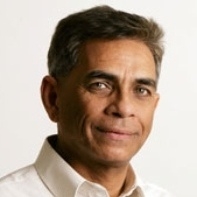
He is a member of the Board of Directors for the Center for Islamic Pluralism based in Washington, D.C., a Senior Fellow with the Canadian Coalition for Democracies, and an academic-consultant with the Center for Security Policy in Washington, D.C. He has been a consultant with CIDA on development issues and has published widely in academic journals on foreign policy matters and area studies of the Middle East and South Asia.
Mansur is featured on the documentary Obsession: Radical Islam's War Against the West produced by the David Horowitz Freedom Center. He also unsuccessfully ran for the Canadian Alliance party in 2000.
Mansur has been accused by Canadian Islamic Congress of using "provocative, self-serving rhetoric", and for "promoting an anti-Arab and anti-Muslim agenda".
He is an Ismaili Muslim.
At a press conference on October 2, 2008, Mansur stated that "Islam is my private life, my conscience...[but] my faith does not take precedence over my duties...to Canada and its constitution, which I embrace freely;" "I am first and most importantly a Canadian;" "only in a free society will you find Islam as a faith and not a political religion." Mansur also criticized New Democratic Party Leader Jack Layton, whom Mansur said "has gone to bed with Islamists", because he is running candidates in Ontario and Quebec who are closely identified with the push for Sharia law.
- Israel: Decades-old conflict not about to cease - Saturday November 24, 2012 at 1:56 pm
- The better man lost the U.S. election - Saturday November 10, 2012 at 9:16 am
- The puzzle in U.S. presidential elections - Saturday November 3, 2012 at 8:43 am